Crochet Bag Pattern: A Maker’s Guide to Stitches, Materials, and a Full Tote to Make
A good crochet bag pattern earns its place in daily…
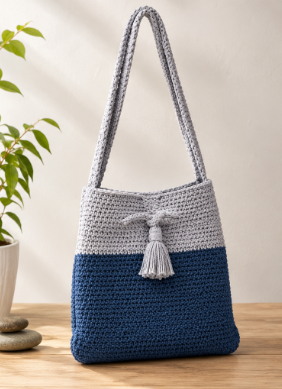
A good crochet bag pattern earns its place in daily rotation through structure as much as style — the right stitch keeps the fabric from stretching under weight, and the right material determines whether the finished piece holds its shape season after season. That combination is what separates a bag crochet design you’ll actually carry from one that ends up sagging in a closet after a few uses.
As someone who spends a lot of time around crochet bag pattern design, the questions that come up most are practical ones — which stitch genuinely works best for a bag body versus a strap, what material to reach for, and which styles are actually trending right now versus fading noise. This guide covers all of it, then walks through a full crochet tote bag pattern from start to finish.
Key Takeaways
- Single crochet remains the most reliable stitch for a crochet bag — it’s dense enough to resist stretching under weight, which matters more for a bag than for almost any other project.
- For straps specifically, a tightly worked slip stitch or single crochet band holds up better under repeated pulling than taller, more open stitches.
- Medium weight cotton yarn is a strong, widely recommended choice for crochet bags and shopping totes, since it’s sturdy, washable, and doesn’t stretch the way some synthetic or wool blends can.
- Trending crochet bag styles for 2026 lean toward textured, structured totes with visible construction details rather than plain, smooth panels.
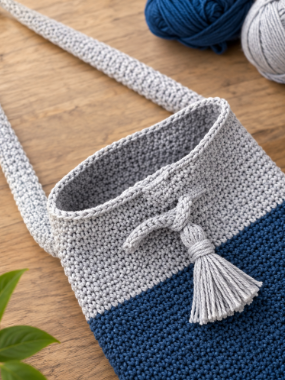
- A full crochet tote bag pattern with an adjustable-loop base, woven strap, and tassel detail is included below.
What’s the Best Stitch for a Crochet Bag Pattern?
For the main body of a crochet bag, single crochet is consistently the go-to choice, and for good reason — it produces a dense, tight fabric that resists stretching under the weight of whatever’s inside, which is exactly the property a bag needs most. More open or taller stitches (half double crochet, double crochet, or lacy patterns) look attractive but tend to let a bag stretch out of shape over time, especially once it’s carrying any real weight.
For a strap specifically, the stitch that holds up best is typically a tight slip stitch or single crochet worked through the back loop only, which creates a firm, cord-like band with minimal stretch — important since straps take repeated pulling stress that the body of the bag doesn’t experience in the same way. As for which stitch is the “prettiest,” that’s genuinely subjective, but textured stitches with visible dimension (like a woven or basket-weave pattern) tend to photograph and read as more intentional than a completely plain single crochet surface, if aesthetics matter as much as structure to you.
How to Start a Simple Crochet Bag Pattern for Beginners
The most approachable starting point is a straightforward round or rectangular base worked in single crochet, built up in continuous rounds without complicated shaping. Adjustable loop starts (rather than a chain-based foundation) give a cleaner, gap-free center for a round bag base, and once you’re past the base, working straight up in continuous single crochet rounds is genuinely simple to follow, even for a first bag project. Given the time involved in the base, sides, and finishing details like a strap, a full bag is more realistically a multi-session project than something you’d finish in 2 hours — that timeframe is better suited to a small pouch or a single motif than a complete tote.
What’s Trending in Crochet Bag Patterns Right Now?
For 2026, the clearest trend in crochet tote bag pattern design is toward structure and visible texture — bags with a defined shape (often built from a flat circular or oval base worked upward) rather than a soft, floppy silhouette, paired with details like woven straps, tassels, or contrast-color banding that show off construction rather than hiding it. Simple, functional tote shapes remain some of the best-selling crochet items overall, since they’re practical enough for daily use while still showcasing visible handmade detail — a balance that keeps them popular season after season rather than being a short-lived trend.
Choosing Yarn for Your Crochet Bag Pattern
Medium weight (#4) cotton yarn is a strong, widely recommended choice for crochet bags and shopping totes specifically — it’s sturdy enough to hold its shape, machine washable, and doesn’t stretch out the way some wool or acrylic blends can under sustained weight. If you’re making something meant for regular grocery or market use rather than a purely decorative piece, cotton’s durability and washability make it the more practical pick over a softer, more delicate fiber.
On yarn storage, freezing skeins of any animal-fiber yarn (wool, alpaca, etc.) for 24 to 48 hours before putting them away is a genuine, common precaution against moth eggs — it’s not relevant to pure cotton yarn specifically, since moths target animal fibers, but it’s worth knowing if your bag stash includes wool blends alongside cotton.
The Pattern: Woven Strap Cotton Tote Bag
Skill Level
Intermediate
Finished Measurements
14 in. (35.5 cm) tall (without handles) x 27 in. (68.5 cm) around
Yarn
Bernat Handicrafter, medium weight #4 yarn (100% cotton, 80 yd./73 m per 1.75 oz./50 g skein): 3 skeins Indigo (Color A), 2 skeins Overcast (Color B)
Hook & Other Materials
- US size G-6 (4mm) crochet hook
- 3.5 in. (9cm) cardboard square
Gauge
17 sts = 4 in. (10cm), 18 rows = 4 in. (10cm)
Specialty Technique
Adjustable loop: Form a loop from your yarn with the tail end behind the yarn coming from your skein. Hold this loop, pinching where the yarn crosses, and insert your hook from the front to catch the working yarn and pull it through. Chain the number of stitches needed to start your pattern, then work the rest of the round’s stitches through the loop and over both the working yarn and the tail yarn. Pull the tail yarn to close the circle at the end of the round.
Note
Tote worked from the bottom up. Rnds 1–15 are joined; Rnds 16–60 are worked in a continuous round.
Instructions
With Color A, form adjustable loop.
| Rnd 1 (RS) | Ch 1 (not a st, here and throughout), work 8 sc into loop, sl st to top of first sc to join — 8 sc. |
| Rnd 2 | Ch 1, [(sc, ch 1, sc) into 1 st, sc into next] 4 times, sl st to top of first sc to join — 16 sts: 12 sc + 4 ch. |
| Rnd 3 | Sl st to ch-1 st, ch 1, [(sc, ch 1, sc) into ch-1 st, sc into next 3 sts] 4 times, sl st to top of first sc to join — 24 sts: 20 sc + 4 ch. |
| Rnd 4 | Sl st to ch-1 st, ch 1, [(sc, ch 1, sc) into ch-1 st, sc into next 5 sts] 4 times, sl st to top of first sc to join — 32 sts: 28 sc + 4 ch. |
| Rnd 5 | Sl st to ch-1 st, ch 1, [(sc, ch 1, sc) into ch-1 st, sc into next 7 sts] 4 times, sl st to top of first sc to join — 40 sts: 36 sc + 4 ch. |
| Rnd 6 | Sl st to ch-1 st, ch 1, [(sc, ch 1, sc) into ch-1 st, sc into next 9 sts] 4 times, sl st to top of first sc to join — 48 sts: 44 sc + 4 ch. |
| Rnd 7 | Sl st to ch-1 st, ch 1, [(sc, ch 1, sc) into ch-1 st, sc into next 11 sts] 4 times, sl st to top of first sc to join — 56 sts: 52 sc + 4 ch. |
| Rnd 8 | Sl st to ch-1 st, ch 1, [(sc, ch 1, sc) into ch-1 st, sc into next 13 sts] 4 times, sl st to top of first sc to join — 64 sts: 60 sc + 4 ch. |
| Rnd 9 | Sl st to ch-1 st, ch 1, [(sc, ch 1, sc) into ch-1 st, sc into next 15 sts] 4 times, sl st to top of first sc to join — 72 sts: 68 sc + 4 ch. |
| Rnd 10 | Sl st to ch-1 st, ch 1, [(sc, ch 1, sc) into ch-1 st, sc into next 17 sts] 4 times, sl st to top of first sc to join — 80 sts: 76 sc + 4 ch. |
| Rnd 11 | Sl st to ch-1 st, ch 1, [(sc, ch 1, sc) into ch-1 st, sc into next 19 sts] 4 times, sl st to top of first sc to join — 88 sts: 84 sc + 4 ch. |
| Rnd 12 | Sl st to ch-1 st, ch 1, [(sc, ch 1, sc) into ch-1 st, sc into next 21 sts] 4 times, sl st to top of first sc to join — 96 sts: 92 sc + 4 ch. |
| Rnd 13 | Sl st to ch-1 st, ch 1, [(sc, ch 1, sc) into ch-1 st, sc into next 23 sts] 4 times, sl st to top of first sc to join — 104 sts: 100 sc + 4 ch. |
| Rnd 14 | Sl st to ch-1 st, ch 1, [(sc, ch 1, sc) into ch-1 st, sc into next 25 sts] 4 times, sl st to top of first sc to join — 112 sts: 108 sc + 4 ch. |
| Rnd 15 | Sl st to ch-1 st, ch 1, [(sc, ch 1, sc) into ch-1 st, sc into next 27 sts] 4 times — 120 sts: 116 sc + 4 ch. |
| Rounds will no longer be joined (work in a continuous circle). | |
| Rnd 16 | Sc into each st around — 120 sc. |
| Repeat Rnd 16 until 44 rnds complete. Fasten off Color A; attach Color B. Repeat Rnd 16 until 53 rnds complete. | |
| Rnd 54 | [Ch 3, skip 3 sts, sc into next 12 sts] 8 times — 120 sts: 24 ch + 96 sc. |
| Repeat Rnd 16 until 59 rnds complete. | |
| Rnd 60 | Sl st into each st around; fasten off — 120 sl sts. |
Purse Strap
With Color B, leave a 10 in. (25.5cm) tail, ch 201.
| Row 1 | Sl st into blo of 2nd ch from hook, sl st into blo of each ch across — 200 sl sts. |
| Row 2 | Ch 1 (not a st), turn, sl st into blo of each st across — 200 sl sts. |
| Repeat Row 2 until 4 rows complete. Leave a 10 in. (25.5cm) tail; fasten off. |
Weave the Purse Strap through the ch-3 spaces from Rnd 54 (leaving ends in adjacent ch-3 spaces outside the bag, centered between any 2 ch-1 corners formed at the bottom of the bag). Ensure the strap is not twisted, and use the 10 in. (25.5cm) tails to join both ends together; do not trim the tail ends.
Tassel
- Wrap yarn around the 3.5 in. (9cm) cardboard 50 times; cut on one end (50 strands = 1 Bundle).
- Evenly place the Bundle between the 10 in. (25.5cm) strands of yarn from the Purse Strap. Use those strands to tie the Bundle into place evenly.
- Cut a 20 in. (51cm) strand of yarn; tie it around the Bundle, knot 1 in. (2.5cm) below the Purse Strap, and tuck the ends into the Bundle behind the knot.
- Trim the tassel ends evenly, as desired.
Finishing
Sew in ends; trim excess.
Frequently Asked Questions
Which stitches work best in a crochet bag pattern?
Single crochet for the body, since it resists stretching under weight better than taller or more open stitches.
What crochet stitch should I use for a bag strap?
A tight slip stitch or single crochet worked through the back loop only, which creates a firm, low-stretch band that holds up under repeated pulling.
How do I make an easy crochet bag for beginners?
Start with an adjustable-loop round base and build upward in continuous single crochet rounds — straightforward to follow without complex shaping.
What can I crochet in 2 hours?
A small pouch or a single motif is realistic in that timeframe; a full bag with base, sides, and strap is more of a multi-session project.
What are some trending crochet bag patterns?
Structured totes with a defined base shape, woven straps, and tassel or contrast-color details are leading current trends over soft, plain silhouettes.
What type of yarn is best for crocheting shopping bags?
Medium weight cotton — it’s sturdy, washable, and holds its shape better under weight than wool or acrylic blends.
What is the best material to make a crochet bag?
Cotton is the most practical choice for a functional, everyday bag, thanks to its durability and washability.
Final Thoughts
A great crochet bag pattern comes down to matching stitch and material to function — dense single crochet for structure, sturdy cotton for durability, and a strap technique built to handle real weight. The woven-strap tote above brings all three together in a genuinely useful, good-looking design.
Give this crochet bag pattern a try, and if your rounds drift out of count or your strap comes out too loose, leave a comment — I’m happy to help you troubleshoot exactly where it went off track.