Crochet Purse Pattern: A Maker’s Guide to Stitches, Yarn, and a Felted Purse to Sew
A crochet purse pattern succeeds or fails on structure more…
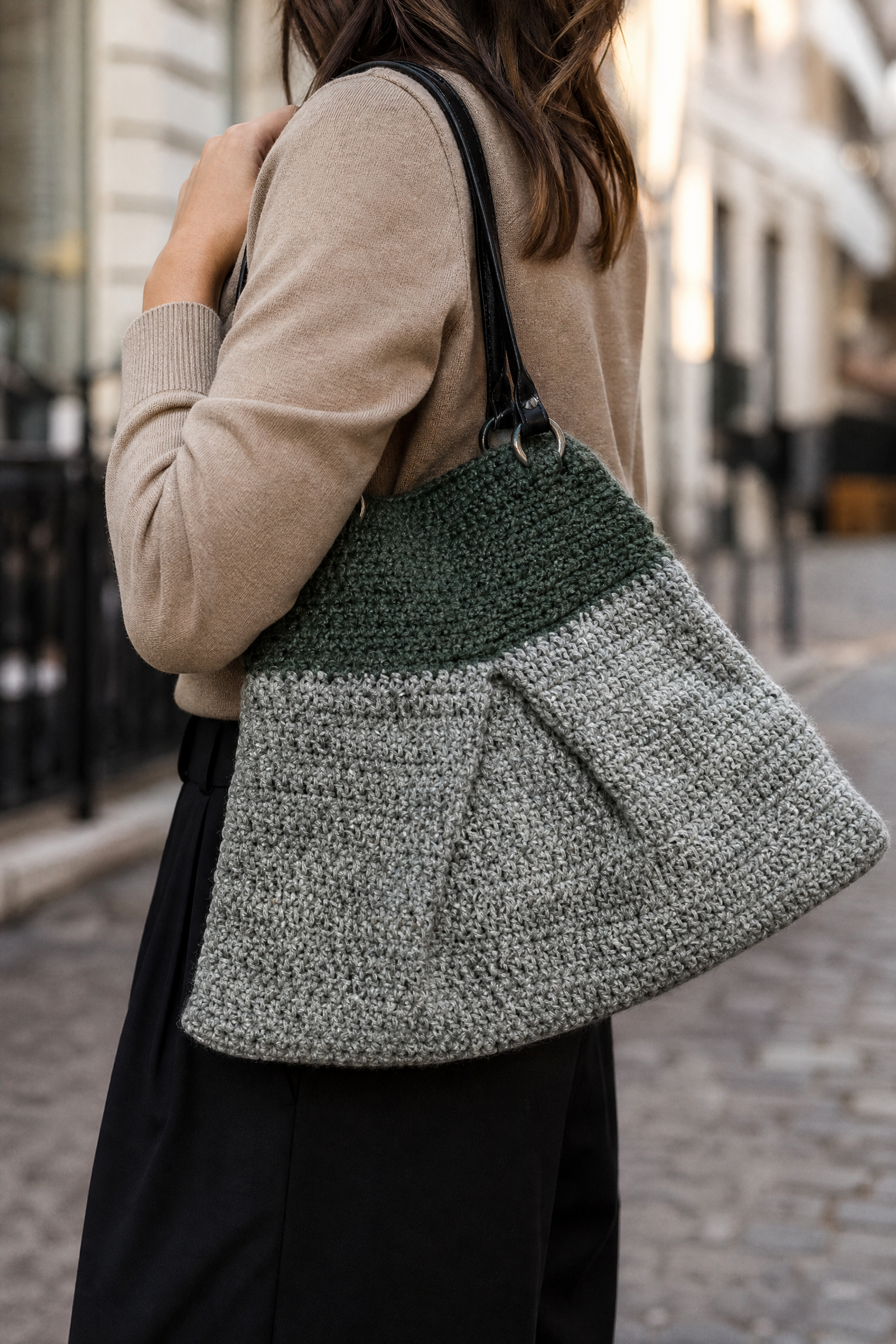
A crochet purse pattern succeeds or fails on structure more than almost any other project — a purse needs to hold its shape empty and full, resist stretching at the strap, and generally look intentional rather than floppy. That’s a higher bar than most crochet accessories need to clear, which is exactly why techniques like felting (deliberately shrinking and firming crocheted fabric in the wash) show up so often in serious purse patterns rather than purely decorative ones.
As someone who spends a lot of time around crochet bag pattern and crochet purse patterns design, the questions that come up most are practical — which stitch actually holds a purse’s shape, whether crochet purses are still fashionable, what sells well if you’re crafting to sell, and which yarns work (and which genuinely don’t) for a structured bag. This guide covers all of it, then walks through a full free crochet purse pattern built around felting for real structure.
Key Takeaways
-
- Double crochet and other dense, structured stitches hold a purse’s shape better than open or lacy patterns, which tend to stretch and sag under weight.
-
- Crochet purses remain genuinely in style — textured, structured designs in particular have stayed popular precisely because they read as intentional handmade pieces rather than dated craft projects.
-
- Felting — shrinking crocheted wool or alpaca fabric in a hot wash cycle — is a reliable way to turn an otherwise floppy crocheted panel into a firm, purse-worthy fabric.
-
- Acrylic yarn cannot be felted, since felting relies on the scale structure of animal fibers like wool and alpaca; synthetic fibers simply don’t lock together the same way under heat and agitation.
-
- A full felted crochet purse pattern, including lining and cardboard-stiffened base construction, is included below.
What’s the Best Crochet Stitch for a Purse, and Is It Sturdy?
Double crochet is a common, practical choice for purse bodies — it builds fabric more quickly than single crochet while staying dense enough to hold structure reasonably well, especially once combined with a technique like felting or a stiffened base. For straps specifically, a tight, low-stretch stitch (or non-crocheted handles, like the leather ones used in the featured pattern below) tends to outperform anything worked in a loose, open stitch, since straps take repeated pulling stress that the body of the purse doesn’t.
Sturdiness for a crochet purse generally comes from a combination of factors rather than stitch choice alone — dense stitching, a felting or blocking process that firms up the fabric, and structural additions like a cardboard-stiffened base or fabric lining, all working together rather than any single element carrying the whole job.
Are Crochet Purses Still in Style?
Yes, and they’ve held up better than a lot of trend-driven handbag categories. Textured, structured crochet purses — the kind built with real shaping and finishing detail rather than a simple flat panel — continue to read as intentional design choices rather than dated craft projects, which is a big part of why they’ve stayed relevant through multiple fashion cycles rather than fading as a passing trend.
What’s the Most Profitable Crochet Item to Make and Sell?
Purses and bags are consistently among the stronger-selling crochet categories at craft fairs and on platforms like Etsy, alongside amigurumi and home decor items — they combine visible handmade detail with genuine daily utility, which tends to justify a higher price point than smaller accessories. That said, “most profitable” depends heavily on your actual time investment versus what you can realistically charge; a felted purse like the one below, with its multi-step construction (crochet, felting, lining, hardware), takes considerably longer than a simple flat tote, so pricing needs to reflect that added labor rather than matching a quicker project’s price point. Trends within crochet shift constantly, so rather than chasing a specific “hot” item, a well-made, structurally sound purse tends to hold its value with buyers regardless of which micro-trend is currently peaking.
What Yarn Should You Use for a Crochet Purse — And Why Avoid Acrylic?
For a purse specifically, the yarn choice depends heavily on whether you’re planning to felt the finished piece. If felting is part of your plan, you need yarn made from animal fiber — wool or alpaca are the standard choices — since felting works by the individual fiber scales locking together under hot water and agitation, a property acrylic and other synthetic fibers simply don’t have. An acrylic purse will never felt, no matter how long you run it through the wash; it will just get wet and stay exactly the same shape and texture it started with.
If you’re not felting, a sturdy worsted weight yarn — cotton for washability, or a wool blend for warmth and body — works well for structured bag projects generally, with acrylic remaining a perfectly reasonable choice when felting isn’t part of the plan.
The Pattern: Felted Crochet Purse

Finished Size
About 13″ (33cm) wide at base, 11½” (29cm) tall, and 3″ (7.5cm) deep.
Yarn
Worsted weight (#4 Medium). Shown here: Berroco Suede (100% nylon; 134 yd/123m per 50g) #3734 Mulch for MC1, 3 balls. Berroco Ultra Alpaca (50% alpaca, 50% wool; 215 yd/197m per 100g) #6277 Peat for MC2, 1 skein.
Hook
Size G/6 (4mm). Adjust hook size if necessary to obtain correct gauge.
Notions
Removable markers, tapestry needle, net laundry bag, 1 pair 12″ (30.5cm) leather handles, ¼ yd (22.5cm) lining fabric, and a 3″ x 13″ (7.5 x 33cm) piece of cardboard for stiffening the bottom.
Gauge
14 double crochet = 4″ (10cm) with suede yarn.
Body
With MC, ch 65. Dc into 4th chain from hook and in each ch across, turn — 63 dc. Ch 3, dc into next st and in each st across, turn. Work even in dc until piece measures 18″ (45.5cm) from beginning. Fasten off.
Pleat
Mark the center of the chain edge of the last row. Mark 2″ (5cm) out from the center marker (point A), then mark 2″ (5cm) out from these markers (point B), as shown. Bring point B to the center point, folding along lines A and B on both sides of the center point. With yarn threaded on a tapestry needle, baste in place.
Top
With CC and RS facing, work 40 sc across one pleated side, working through all layers of the pleat. Work in sc for 1 more row. Sc2tog at the beginning of every row, 10 times — 30 sc remain. Fasten off. Repeat for the other side.
Felting
Place the bag in a net laundry bag and run it through a washer cycle set on a small load, hot wash, and cold rinse, adding a small amount of mild detergent. Stop the washer periodically to check the progress of the felting; run through additional cycles if necessary until the bottom of the felted portion measures about 8″ (20.5cm) across and the felted portion is firm.
Gussets
With MC threaded on a tapestry needle, sew the side seams. Turn the bag inside out and hold it upside down. Flatten out the bottom of the bag so the fold line is centered, forming a point at each side. With the tapestry needle, sew the base 2½” (6.5cm) in from each side. Fold the points up toward the sides of the bag and sew the tips of the points to the side seams.
Lining
Cut a 7″ x 14″ (17.8 x 35.5cm) piece of lining fabric. Fold the fabric lengthwise with RS together, and using a ½” (1.3cm) seam allowance, sew the long sides together. Sew one short side. Turn RS out, insert the cardboard into the lining pouch, and slip stitch the end of the pouch closed. Insert the fabric-covered cardboard into the bottom of the bag so that it lies flat.
Cut a 7½” x 10″ (19.1 x 25.5cm) piece of lining fabric. With a sewing needle, matching thread, and RS together, sew the short sides together. Sew the bottom seam and miter the corners as for the bag. Fold down the top edge ½” (1.3cm) to the WS. Make pleats in the lining as for the bag. With WS together, sew the lining into the bag.

Finishing
With CC threaded on a tapestry needle, sew the bag handles to the felted portion of the bag. Weave in loose ends.
Frequently Asked Questions
What is the best crochet stitch for a purse?
Double crochet is a common choice for purse bodies — dense enough to build good structure, especially when combined with felting or a stiffened base.
Choosing the right crochet purse pattern makes all the difference when aiming for professional-grade structure and durability.
What crochet stitch should I use for a bag strap?
A tight, low-stretch stitch, or non-crocheted handles like leather, hold up better under the repeated pulling stress straps experience.
Are crochet purses still in style?
Yes — structured, textured designs in particular have stayed popular across multiple fashion cycles rather than fading as a trend.
How do you make a crochet purse sturdy?
A combination of dense stitching, a firming process like felting, and structural additions like a cardboard-stiffened base and fabric lining.
What is the most profitable crochet item?
Bags and purses tend to sell well at craft fairs and online, though profitability depends on pricing appropriately for the time a multi-step project like felting and lining actually takes.
Can I crochet a purse with acrylic yarn?
Yes, for a non-felted purse — but acrylic cannot be felted, since felting relies on animal fiber scales that synthetic yarns don’t have.
Why avoid acrylic yarn?
Only if your pattern specifically requires felting — acrylic simply won’t shrink or firm up in the wash the way wool or alpaca will.
Final Thoughts
A well-built crochet purse comes down to structure at every stage — the right stitch, the right yarn for whether or not you’re felting, and finishing details like a stiffened base and proper lining that most simpler bag patterns skip. The felted purse above brings all of that together into a genuinely sturdy, professional-looking result.
The felted purse detailed in this crochet purse pattern brings all of that together into a genuinely sturdy, professional-looking result.
Give the pattern a try, and if your felting doesn’t firm up as expected or your pleats won’t sit flat, leave a comment — I’m happy to help you troubleshoot exactly where it went off track.
