Crochet Shawls: A Maker’s Guide to Stitches, Yarn, and a Full Shawl Pattern
A well-made crochet shawl walks a fine line — open…
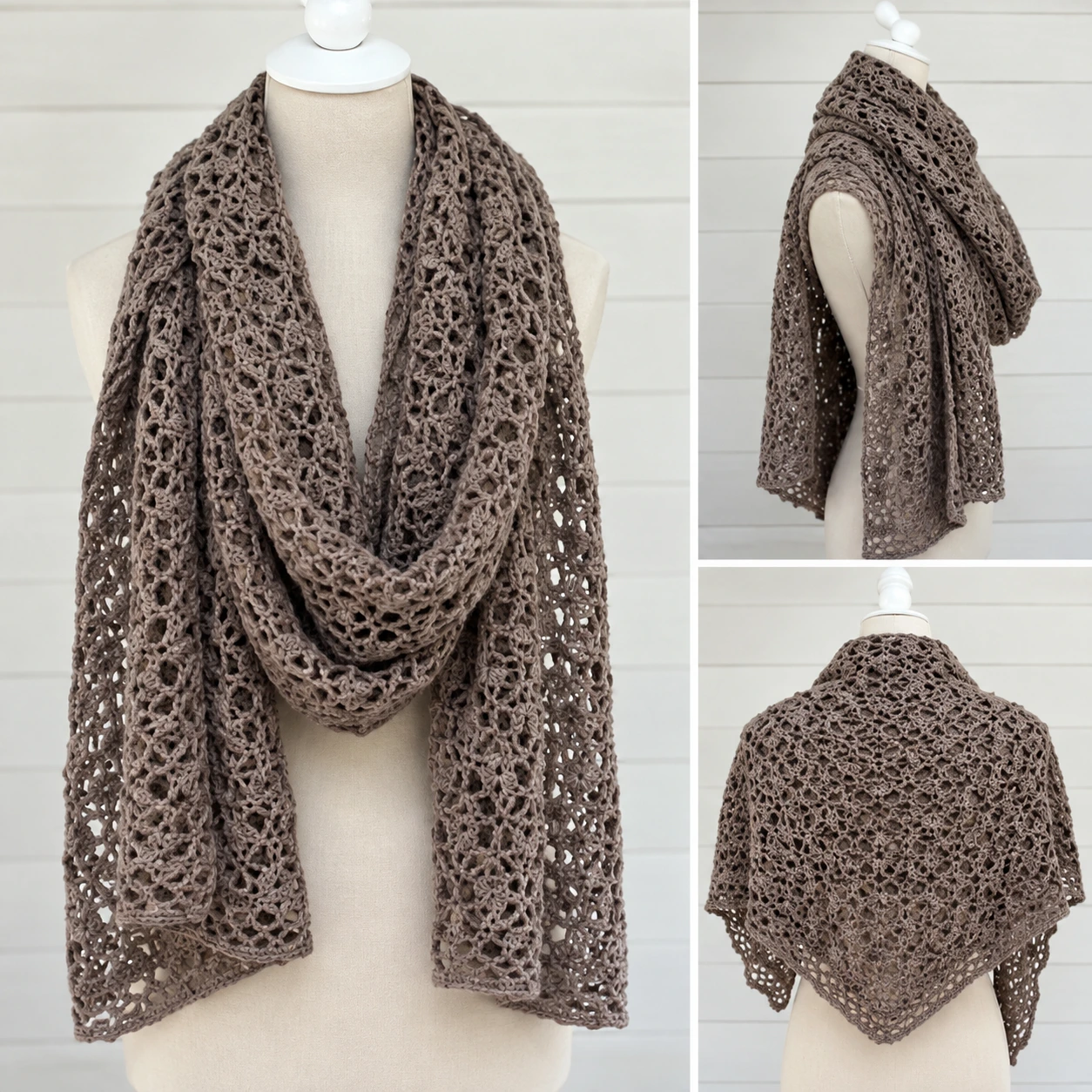
A well-made crochet shawl walks a fine line — open and lacy enough to drape well, but structured enough to hold its shape once it’s off the blocking mats. Getting that balance right comes down to two choices more than anything else: which stitch pattern you use, and which yarn you build it from. Get either one wrong, and even a beautifully designed crochet shawl for women can end up stiff, heavy, or shapeless.

As someone who spends a lot of time around crochet shawls for women and shawl pattern design generally, the questions that come up most are practical — which stitch actually looks the best and uses yarn efficiently, which yarn to reach for, and what the basic shawl shapes even are before you start picking a pattern. This guide covers all of it, then walks through a full crochet shawl pattern from start to finish.
Key Takeaways
- Most shawls fall into one of five basic shapes — triangle, rectangle, circular, crescent, or asymmetric — and knowing which shape you want narrows down pattern choice considerably.
- Open, lacy stitches with chain spaces (like V-stitches or shell patterns) use noticeably less yarn than dense stitches like single crochet, making them a practical choice for a large piece like a shawl.
- Natural fiber yarns (wool, alpaca, silk blends) block far more reliably than acrylic, which matters a lot for lace-style shawls meant to be stretched and shaped after crocheting.
- Freezing wool or animal-fiber yarn for 24–48 hours before storing it is a real, common precaution against moth eggs, not an old wives’ tale.
- A full V-stitch shawl pattern, worked in an easy repeat, is included below.
What Are the Basic Shawl Shapes, and What’s the Best Stitch?
Most crochet shawls patterns fall into one of five basic shapes: triangle (the most common, worked from a point or the top edge outward), rectangle (a simple scarf-like shape worn draped or wrapped), circular (worked outward from a center point, then sometimes cut or left as a full circle), crescent (a curved shape that sits nicely around the shoulders without slipping), and asymmetric or wing shapes (an increasingly popular modern style with one longer point). Knowing which shape appeals to you narrows down pattern choice a lot faster than searching by stitch alone.
As for stitch choice, open, textured patterns with chain spaces built in — V-stitches, shell stitches, and simple mesh or filet patterns — tend to be favorites for shawls specifically, since they drape better than dense fabric and use noticeably less yarn per row than something like single crochet. If yarn efficiency matters to you (a real concern on a large piece like a shawl), reaching for an openwork stitch with chain spaces rather than a solid, dense one is the more economical choice, not just the prettier one.
What Kind of Yarn Is Best for a Crochet Shawl?
Natural fiber yarns — wool, alpaca, silk, or blends of these — are generally the better choice for a shawl over pure acrylic, for one specific reason: blocking. Lace and openwork shawl patterns rely on blocking (wetting or steaming the finished piece, then pinning it into shape to dry) to open up the stitch pattern and achieve the drape the design is meant to have. Natural fibers hold that blocked shape well; acrylic largely doesn’t, since it lacks the same fiber memory, meaning a blocked acrylic shawl can revert closer to its original, unstretched shape over time.
On the storage side, freezing skeins of wool or other animal-fiber yarn for 24 to 48 hours before putting them away is a genuinely common precaution in the fiber arts community — it’s meant to kill any moth eggs or larvae that might already be present, since wool moths specifically target animal fibers and can do real damage to stored yarn or finished pieces if left unchecked. It’s not an old wives’ tale; it’s a standard pest-prevention step many crocheters build into their yarn storage routine.
What Are Some Good Crochet Shawl Patterns for Beginners?
For a first shawl, a simple triangle or rectangle shape worked in a single repeating stitch pattern is the easiest entry point — you avoid the shaping complexity of a crescent or asymmetric design while still ending up with a genuinely wearable, good-looking result. A V-stitch pattern, like the one featured below, is a particularly good beginner choice: the repeat is straightforward once you’ve worked through it a couple of times, and the open structure makes mistakes easier to spot and fix than in a dense stitch pattern.
The Pattern: V-Stitch Crochet Shawl
This pattern is worked in multiples of 8 plus 4 stitches — chain as many as you need to reach your desired shawl length, following that multiple.
Row 1
Begin with yarn over and dc in the fifth chain from the hook, working in the back part of the chain only. Ch 1, skip 2, and dc in the next chain. Ch 3, then dc in the same stitch (this creates a stitch that looks like a V stitch).
Skip 1 stitch and work a dc but leave 2 chains on the hook (don’t finish that double crochet), then skip 2 chains and work a dc to finish the second half of the first dc — when you have 3 loops on the hook, pull through all 3. You’ll now have only one working loop on the hook. Repeat this sequence across the row.
When you reach the end, you should have four chains left. Ch 1, skip 2, and work 2 dcs in the last 2 chains to create a V stitch.
Row 2
This row starts the pattern repeat.
Start with ch 3 (counts as a dc) and ch 2 more (5 chains total — treat as dc + ch 2). Turn your work.
Work a dc in the top of the first dc of the V stitch from Row 1. Then work 2 dcs into the chain-3 space. Work the next dc into the last dc in that group from Row 1. Ch 2, and in the top of that decrease from Row 1, work 1 dc. Ch 2 — that’s the repeat for this row.
At the very end of the row, work a dc in the top of the chain-3 space.
Row 3
Ch 4 (acts as a dc and ch 1). Dc in the top of the dc you made at the end of the previous row.
Ch 1 — you’ll reach a group of 4 dcs. Insert the hook in the first leg of the first dc and pull through (2 loops on hook). Yarn over, go into the second leg of the last dc, yarn over, pull through two, yarn over and pull through all three — this creates a decrease.
After the decrease, ch 1, move to the single dc sitting there and work a wide V: ch 3, then dc into the top of that lone dc from the previous row. Then you’ll come to a group of four again, so work another decrease.
Repeat this sequence to the end of the row. At the end, ch 1 and work a dc in the top of that chain-4 space.
Row 4
Begin with 3 chains. Work a dc in the second dc of the V stitch from the previous row.
Ch 2 — you’ll reach a decrease, so work 1 dc. Ch 2 — you’ll reach a wide V, so work a dc in the first one, 2 dcs in the chain space, then a dc in the second half of the wide V. Ch 2 — you’ll reach another decrease, so work a dc on top of it.
Repeat these steps across the row. To end, ch 2, work a dc in the last regular dc from the previous row, then work another dc in the third chain from the chain-4 of the previous row.
Row 5
Ch 3 and work a dc not in the last dc but the next one from the previous row. Ch 1 — you’ll reach a lone dc, so work a wide V here. Ch 1 — you’ll reach a set of four dcs, so work a decrease here. Ch 1, and repeat the same steps across the row.
At the end, work 2 dcs to create a V stitch.
How to Continue
The basic repeat is Row 2, Row 3, Row 4, Row 5 — repeat these four rows in sequence until your shawl reaches the desired size.
How to Finish
To create a border, work a row of dcs in each stitch around the outer edge.
Frequently Asked Questions
What are the 5 basic shawl shapes?
Triangle, rectangle, circular, crescent, and asymmetric (or wing) shapes cover most crochet shawl patterns.
Which crochet stitch is not a yarn eater?
Open, lacy stitches with chain spaces — like V-stitches or shell patterns — use noticeably less yarn than dense stitches like single crochet.
What are some good crochet shawl patterns for beginners?
A simple triangle or rectangle shape in a single repeating open stitch, like a V-stitch pattern, is the easiest starting point.
What kind of yarn is best for a crochet shawl?
Natural fibers like wool, alpaca, or silk blends, since they block reliably — a step that matters a lot for lace and openwork shawl designs.
Why avoid acrylic yarn for a shawl?
Acrylic doesn’t hold a blocked shape well compared to natural fibers, so a lace pattern’s drape can revert closer to its original, unstretched form over time.
Why put yarn in the freezer?
Freezing wool or animal-fiber yarn for 24–48 hours before storage is a common precaution to kill any moth eggs or larvae before they can damage stored yarn.
Final Thoughts
A great crochet shawl comes down to matching your stitch and yarn choice to how you actually want the finished piece to behave — open and airy versus dense and warm, natural fiber that blocks beautifully versus acrylic that’s easier to care for. The V-stitch pattern above is a solid, adaptable starting point regardless of which shape or yarn you land on.
Give the pattern a try, and if your row counts drift or the repeat doesn’t line up, leave a comment — I’m happy to help you figure out where it went off track.