Crochet Socks: A Maker’s Guide to Patterns, Yarn, and a Full Sock Pattern to Try
Crochet socks have a reputation problem — a lot of…
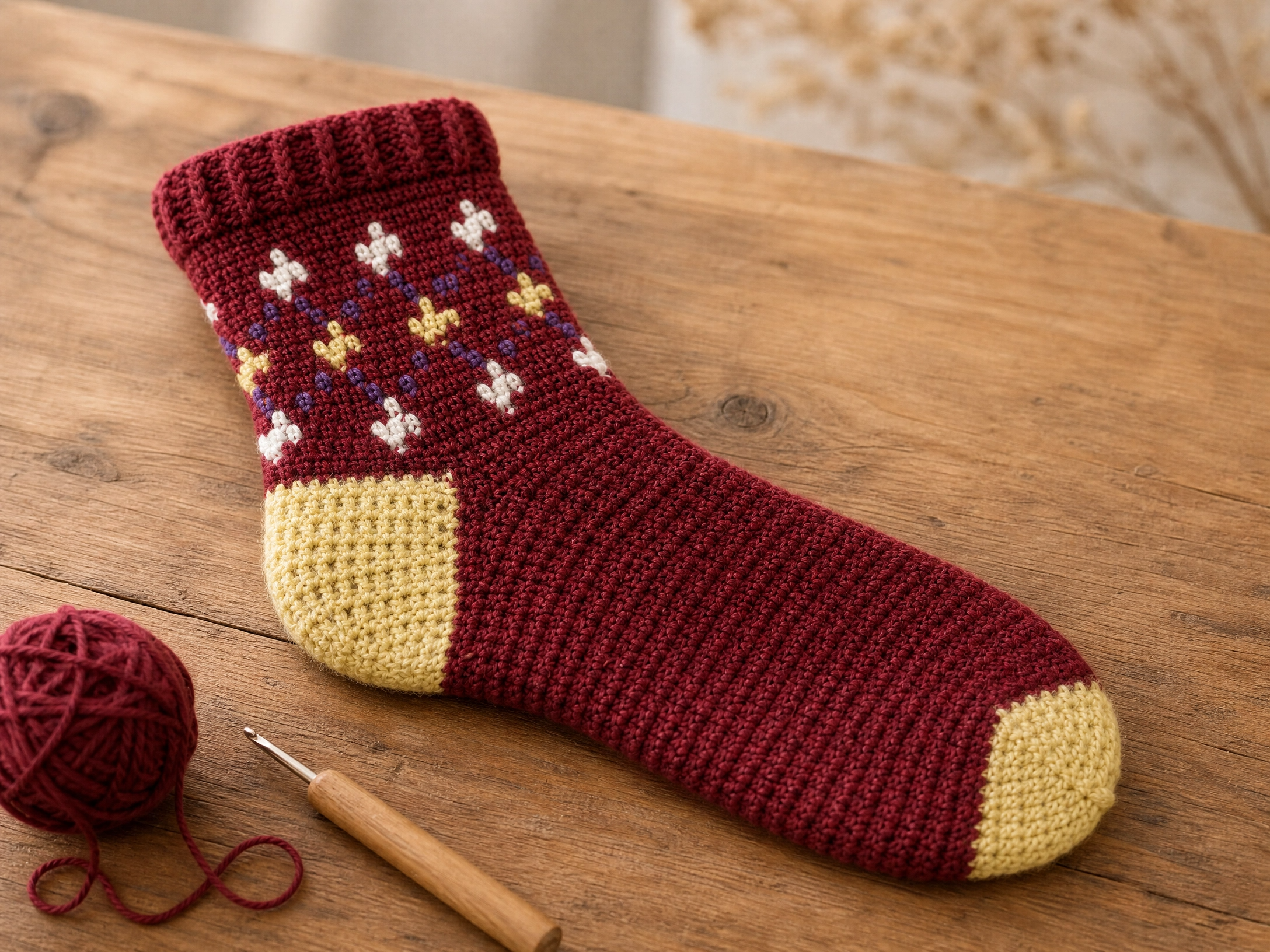
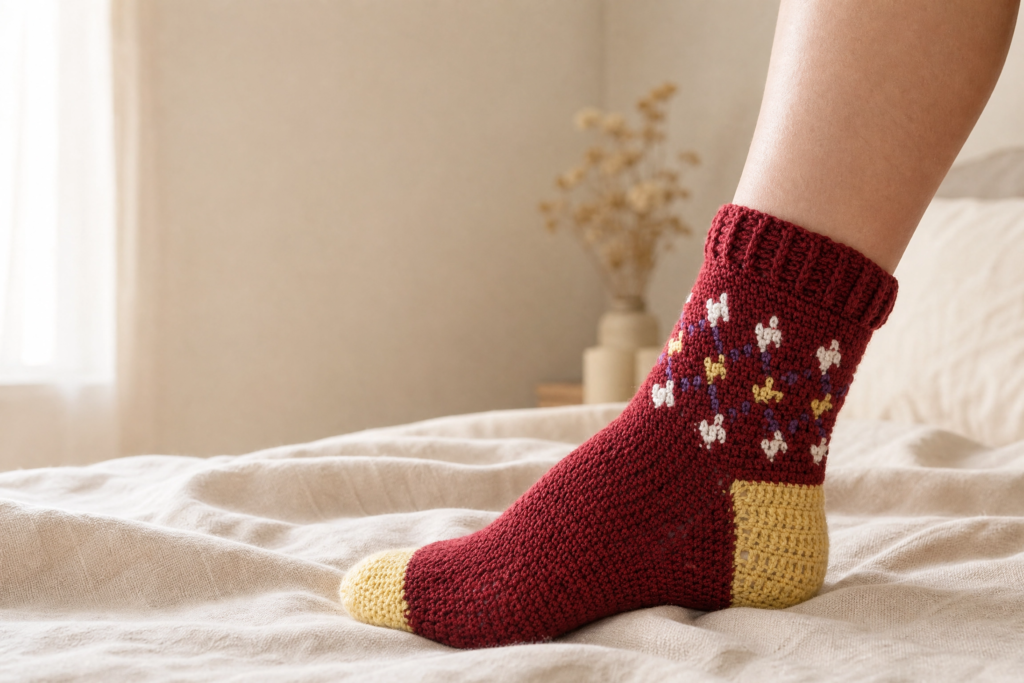
Crochet socks have a reputation problem — a lot of people assume “crochet” automatically means stiff, bulky, or itchy, which is exactly the opposite of what you want on your feet. That reputation is outdated. With the right stitch and the right yarn, crochet sockets can be just as soft, stretchy, and comfortable as their knitted counterparts, while still being genuinely achievable for someone newer to fiber crafts working from crochet patterns for beginners.
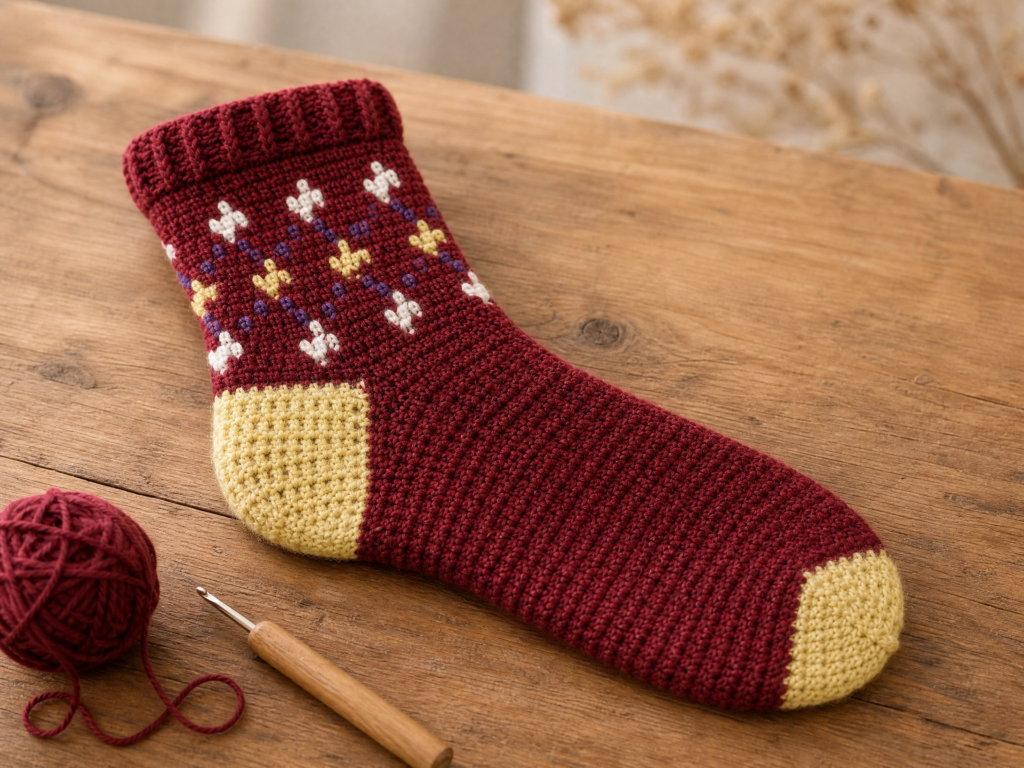
As someone who spends a lot of time around crochet patterns and crochet ideas for functional wearables, the questions I hear most about socks specifically come down to comfort, difficulty, and yarn choice — plus a few of the more colorful pieces of crochet folklore that come up along the way. This guide covers all of it, then gives you a full, free crochet pattern for crochet socket patterns you can work from.
Key Takeaways
- Crochet socks are a genuine, comfortable option — the key is using the right stitch (extended single crochet is a common choice) and a proper sock-weight yarn rather than standard worsted weight.
- Socks are generally considered one of the more advanced crochet patterns to work through, due to shaping around the heel and toe, though they’re absolutely achievable once you understand the construction.
- “Second sock syndrome” — losing motivation to make the matching second sock after finishing the first — is a real, widely shared experience among both knitters and crocheters, not a sign you’re doing something wrong.
- Sock-specific yarn blends (often wool with nylon for durability) outperform 100% cotton for socks, since cotton lacks the stretch and durability needed at the heel and toe.
- A full sock pattern with heel, gusset, and toe shaping is included below.
Are Crochet Socks Actually a Thing, and Are They Comfortable?
Yes, and they’ve become a genuinely established category of crochet patterns, not a novelty. The comfort question comes down almost entirely to stitch choice — a dense, standard single crochet fabric can feel stiff against skin, but techniques like extended single crochet create a softer, more flexible fabric that moves closer to knitted sock texture while still using a hook rather than needles. Whether you knit or crochet your socks is really a matter of preference and which technique you already know — both produce genuinely wearable results when done with the right yarn and stitch.
As for “second sock syndrome” — yes, this is a real and extremely common experience, not something unique to you if you’ve felt it. After finishing one sock, the novelty of the pattern has worn off, and making the near-identical second one can feel like a chore compared to starting something new. It’s common enough in the fiber arts community that it has its own name, and the usual advice is to work both socks somewhat in tandem, or to commit to finishing the pair before starting anything else, specifically to avoid ending up with a drawer of single, unmatched socks.
What’s the Hardest Thing to Crochet, and Is It Harder Than Knitting?
Socks are frequently cited as one of the more challenging crochet patterns for a beginner to move into, mainly because of the heel turn and gusset shaping — sections that require short rows and decreases worked in a specific sequence, unlike a simple flat or round project. That said, “hardest” is relative; once you’ve worked through a heel turn once, the technique becomes much more approachable on future projects.
As for whether crochet or knitting is harder overall, there’s no universal answer — each has techniques that are more demanding than the other’s equivalent. Sewing and crochet are similarly hard to compare directly, since they involve different skills (garment construction and fitting versus stitch-by-stitch fabric building) rather than one being a strictly harder version of the other.
On a lighter note, the “knitter’s curse” people ask about most likely refers to what’s more commonly called the sweater curse — a well-known piece of fiber arts folklore holding that if you knit or crochet a big, time-intensive gift like a sweater for a romantic partner, the relationship ends shortly after. It’s treated as a fun, semi-serious superstition within the community rather than anything crafters take as literal fact, though plenty of makers have their own stories about it.
What Can You Realistically Crochet in an Hour?
For quick projects, small accessories like coasters, simple pouches, or a single motif square are realistic in 15 to 30 minutes, while slightly larger pieces — a hat, fingerless mitts, or a small bag — fit comfortably into a 1 to 2 hour window depending on your speed and the yarn weight. Socks, by contrast, are a multi-session project rather than a quick one, given the shaping involved — worth knowing going in so you don’t expect a full pair to be a single-sitting project the way a coaster is.
As for age, yes, many 12-year-olds can absolutely learn to crochet — basic stitches are well within reach at that age with some patience and guidance, and simple, flat projects make a good, low-frustration starting point before working toward something as involved as a sock.
What Yarn Is Best for Crochet Socks?
A dedicated sock-weight yarn — typically a wool blend with nylon added for durability and often a bit of rayon for sheen and softness — is the standard choice, and for good reason. The nylon content specifically helps the sock resist wear at the heel and toe, the two areas that take the most friction and stress during regular wear. Plain 100% cotton, while breathable, generally isn’t a great choice for socks on its own — it lacks the elasticity and durability that wool-nylon blends offer, which means cotton socks tend to stretch out and wear through faster at high-friction points. If durability is your priority, look specifically for a sock yarn blend rather than a general-purpose yarn, since “sock yarn” as a category is specifically engineered for this kind of wear.
The Pattern: Extended Single Crochet Socks
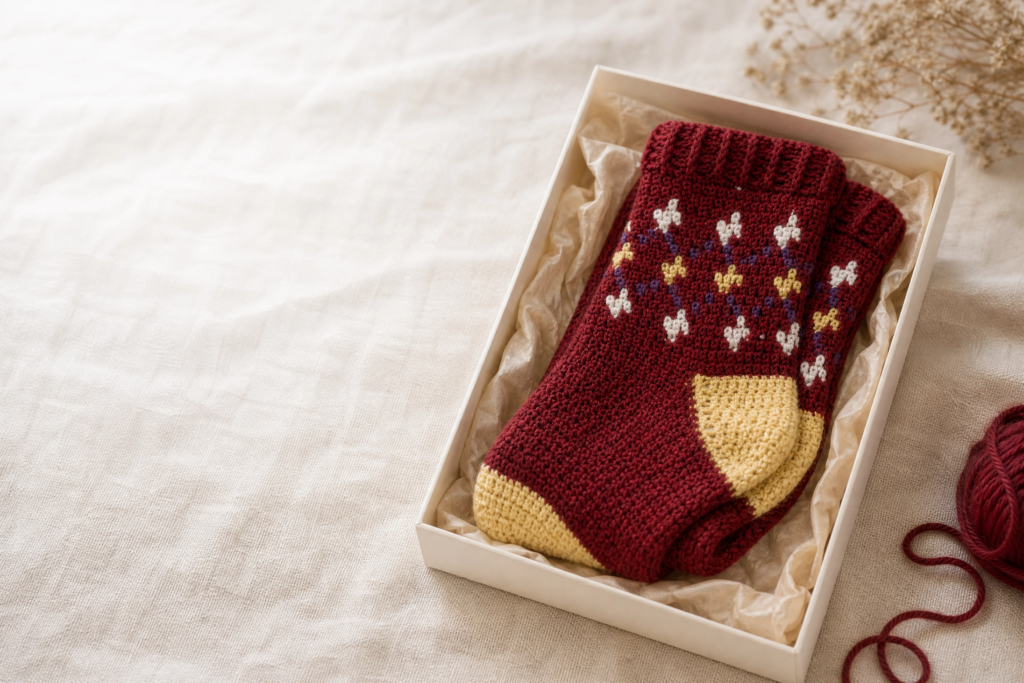
Skill Level
Intermediate
Finished Sizes
Instructions given fit woman’s shoe size 6–7 (small); changes for 7–8 (medium) and 8–9 (large) are in [ ].
Finished Measurements
Foot circumference: 7 (small) [8 (medium), 9 (large)] inches
Foot length: 9 (small) [10 (medium), 11 (large)] inches
Materials
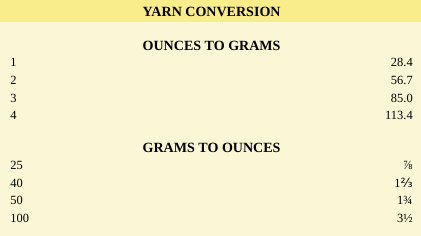
- Premier Yarns Deborah Norville Serenity Sock super fine (sock) weight wool/nylon/rayon yarn (1¾ oz/230 yds/50g per skein): 1 [2, 2] skein(s) #5005 burgundy; 1 skein each #5001 soft white, #5008 hot lime, and #5004 purple
- Size F/5 (3.75mm) crochet hook, or size needed to obtain gauge
- Tapestry needle
- Stitch markers
Gauge
24 ext sc = 4 inches; 20 ext sc rows = 4 inches
Pattern Notes
Join with slip stitch as indicated unless otherwise stated. Refer to a Color Chart as needed. When working with 2 colors, the color not in use is always carried along the tops of the stitches being worked to encase it within the stitches of the current round. Working the Leg with the sock wrong side out will give it a bit more stretch. The Gusset, Foot, and Toe are worked in continuous rounds — do not turn or join unless otherwise stated. Place a marker in the first stitch of each round and move it up as work progresses. Chain-3 at the beginning of a round counts as the first double crochet unless otherwise stated.
Special Stitches
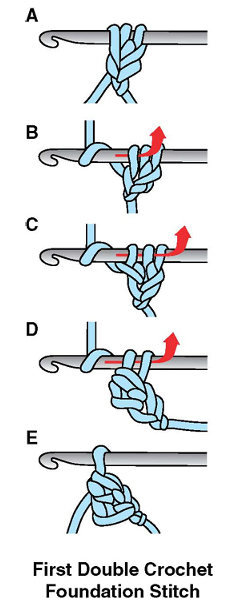
First foundation double crochet (first foundation dc): Ch 2, yo, insert hook into 2nd ch from hook, yo, pull up lp, yo, pull through 1 lp on hook (ch-1 completed), [yo, pull through 2 lps on hook] twice.
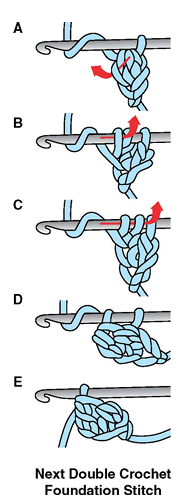
Next foundation double crochet (next foundation dc): *Yo, insert hook in last ch-1 made, yo, pull up lp, yo, pull through 1 lp on hook (ch-1 completed), [yo, pull through 2 lps on hook] twice (dc completed), rep from * as indicated.
Extended single crochet (ext sc): Insert hook in indicated st, yo, pull up lp, yo, pull through first lp on hook, yo, pull through 2 lps on hook.
Sock (Make 2)
Cuff
Rnd 1: With burgundy, first foundation dc (see Special Stitches), 41 [47,
53] next foundation dc (see Special Stitches), join (see Pattern Notes) in
first st, place marker (see Pattern Notes). (42 [48, 54] dc)
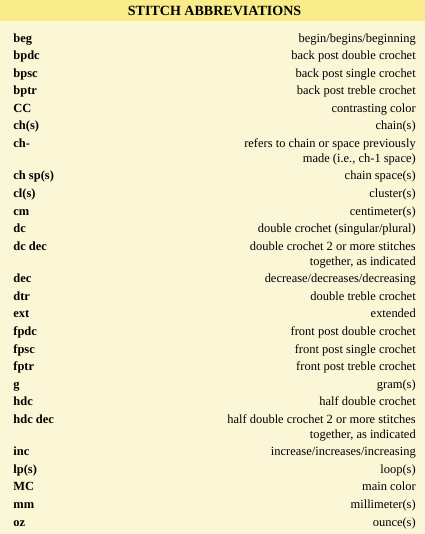
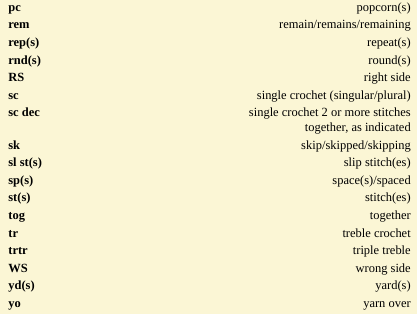
Rnd 2: *Fpdc (see Stitch Guide) around next dc, bpdc (see Stitch Guide)
around next dc, rep from * around.
Rep rnd 2 until Cuff measures 2 inches from beg
Leg
Rnds 1–3: Now working in joined rnds, ext sc in each st around, join in first st.
Rnds 4–13: Ext sc in each st across, change color (see Stitch Guide)
according to Color Chart, carrying unused color under sts (see Pattern
Notes).
Rnds 14 & 15: Ch 1, ext sc in each st around, join in first st. Change color
to lime in last st of rnd 15.
Heel Flap
Row 1 (RS): Now working in rows, sc in each of next 21 [24, 27] sc, leaving rem sc unworked, turn.
Row 2: Ch 3 (see Pattern Notes), dc in next sc and in each rem sc across,
turn.
Rep rows 1 and 2 alternately until Heel Flap measures 2 inches, ending with
row 2.
Heel Turning
Row 1 (RS): Ch 1, sc in first sc, [sc dec (see Stitch Guide) in next 2 sts]
twice, sc in each of next 11 [14, 17] sc, [sc dec in next 2 sts] twice, sc in last
sc, turn. (17 [20, 23] sc)
Row 2: Ch 1, sc in each sc across, turn.
Row 3: Ch 1, sc in first sc, [sc dec in next 2 sts] twice, sc in each of next 7
[10, 13] sc, [sc dec in next 2 sts] twice, sc in last sc, turn. (13 [16, 19] sc)
Row 4: Rep row 2.
Row 5: Ch 1, sc in first sc, [sc dec in next 2 sts] twice, sc in each of next 3
[6, 9] sc, [sc dec in next 2 sts] twice, sc in last sc, change color to burgundy,
turn. (9 [12, 15] sc)
Gusset
Rnd 1: Now working in continuous rnds and working in row ends on Heel Turning and Heel Flap, 13 sc evenly sp across row ends, place marker in last sc made, ext sc in each unworked st across Leg, working in row ends on Heel Flap and Heel Turning, 13 sc evenly sp across row ends, place marker in first sc made, leaving sts on row 5 of Heel Turning unworked. (56 [62, 68] sts)
Rnd 2: Ext sc in each st across to st before marked st, sc dec in next st and marked st, place marker, ext sc in each st across to next marked st, sc dec in marked st and next st, ext sc in each rem st around. (54 [60, 66] sts)
Next rnds: [Rep rnd 2] 6 times. (42 [48, 54] sts)
Foot
Rnd 1: Ext sc in each st around. Rep rnd 1 until Foot measures 8 [9, 10] inches from back of Heel, or 1 inch shorter than desired length. Fold piece in half and mark st at right side of Foot for beg of Toe, removing or adding sts as needed.
Toe
Rnd 1: With lime, sc in each ext sc around.
Rnd 2: Sc in next sc, sc dec in next 2 sts, sc in each of next 16 [19, 22] sc, sc dec in next 2 sts, sc in next sc, sc dec in next 2 sts, sc in each of next 16 [19, 22] sc, sc dec in next 2 sts. (38 [44, 50] sts)
Rnd 3: Sc in each sc around.
Rnd 4: Sc in next sc, sc dec in next 2 sts, sc in each of next 14 [17, 20] sc, sc dec in next 2 sts, sc in next sc, sc dec in next 2 sts, sc in each of next 14 [17, 20] sc, sc dec in next 2 sts. (34 [40, 46] sts)
Rnd 5: Rep rnd 3.
Rnd 6: Sc in next sc, sc dec in next 2 sts, sc in each of next 12 [15, 18] sc, sc dec in next 2 sts, sc in next sc, sc dec in next 2 sts, sc in each of next 12 [15, 18] sc, sc dec in next 2 sts. (30 [36, 42] sts)
Rnd 7: Rep rnd 3.
Rnd 8: Sc in next sc, sc dec in next 2 sts, sc in each of next 10 [13, 16] sc, sc dec in next 2 sts, sc in next sc, sc dec in next 2 sts, sc in each of next 10 [13, 16] sc, sc dec in next 2 sts. (26 [32, 36] sts)
Rnd 9: Rep rnd 3.
Rnd 10: Sc in next sc, sc dec in next 2 sts, sc in each of next 8 [11, 14] sc, sc dec in next 2 sts, sc in next sc, sc dec in next 2 sts, sc in each of next 8 [11, 14] sc, sc dec in next 2 sts. (22 [26, 30] sts)
Rnd 11: Rep rnd 3. Leaving long end, fasten off.
Turn Sock WS out. With long end, sew opening closed.
Finishing
Weave in all ends. Wash and lay flat to block.
Frequently Asked Questions
Is crochet good for socks?
Yes — with the right stitch, like extended single crochet, and a proper sock-weight yarn, crochet socks can be just as comfortable as knitted ones.
Are crochet socks comfy?
Yes, when made with a flexible stitch and sock-appropriate yarn rather than a stiff, dense stitch and general-purpose yarn.
What is second sock syndrome?
A common, widely shared experience where motivation drops after finishing the first sock, making the matching second one feel tedious to complete.
What is the hardest thing to crochet?
Socks are frequently cited as challenging for beginners specifically because of heel turn and gusset shaping, though the technique becomes manageable with practice.
Can ADHD people crochet?
Yes — many people who describe themselves as having ADHD find the repetitive motion of crochet genuinely engaging or calming, though that’s an individual, anecdotal experience rather than a clinical recommendation.
What can I crochet in 1 hour?
Small accessories like hats, fingerless mitts, or a small bag are realistic in that timeframe; socks require multiple sessions due to their shaping.
Which yarn is best for crochet socks?
A dedicated sock-weight wool-nylon blend, since the nylon adds durability at high-friction points like the heel and toe.
Is 100% cotton yarn good for socks?
Not ideally — cotton lacks the elasticity and durability of a wool-nylon sock blend, so it tends to stretch out and wear through faster.
Final Thoughts
Crochet socks reward a bit of patience with the heel and gusset shaping, but the payoff is a genuinely wearable, comfortable pair using techniques that are well within reach once you’ve worked through the construction once. Choose the right sock yarn, take the second-sock slump in stride, and the rest is just steady, repetitive stitching.
Give the pattern a try, and if your heel turn or gusset comes out an unexpected size, leave a comment — I’m happy to help you troubleshoot exactly where the stitch count went off track.